Weight Loss Injection (GLP-1) Monitoring Blood Test
    Weight Loss Injection (GLP-1) Monitoring Blood Test

Weight Loss Injection (GLP-1) Monitoring Blood Test

£169

You’ve just started your weight loss journey. Now stay one step ahead with our GLP-1 monitoring test.

Designed for people taking weight loss injections (like Ozempic, Wegovy, or Mounjaro), this in-depth test helps you keep an eye on areas of your health most affected by treatment, from kidney and liver function to pancreatic health. It’s a smart way to monitor for side effects, catch complications early, and feel reassured as you go.

This test isn't suitable for people with symptoms of pancreatitis. If you have a combination of severe abdominal pain, nausea, vomiting, or a fever, please seek urgent medical attention.

  • Results estimated in 5 working days
  • Convenient testing options
  • Free delivery
  • Bespoke doctor’s report

Includes markers for liver, kidney, and pancreatic function, alongside nutrition markers, HbA1c, cholesterol, and a full blood count.

How do you want to take your sample?

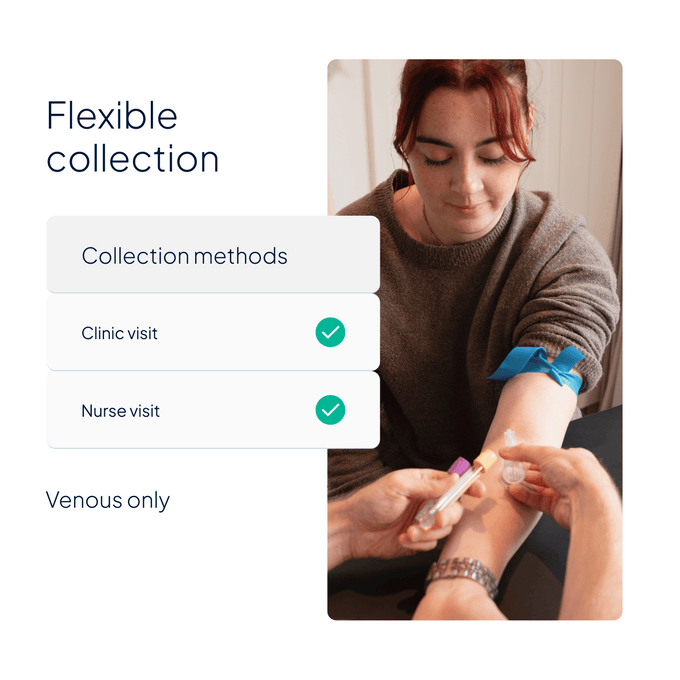
  • Book a venous draw at a clinic   Venous
    +£35

    Visit one of our national clinic partners for a nurse to take your venous blood sample from a vein in your arm. We’ll email you instructions on how to book after we’ve processed your order.
  • Book a venous draw at home with a nurse Venous
    +£59

  • Self-arrange a professional sample collection Venous
    Free

18+ Only. T&Cs apply.

Find your nearest clinic
Key: You are here Appointment required Walk-in service
Results dashboard
Your health, expertly explained

Go beyond the numbers

Get ready to elevate your health understanding with a personalised doctor's report. Go beyond results and tap into expert insights tailored just for you.

  • Actionable advice
  • Expert support
  • Tailored recommendations
How Medichecks blood testing works
Blood testing made easy

How it works

You have the flexibility to choose what works best for you. Enjoy the comfort of having a friendly nurse visit your home for a quick blood draw, opt for a convenient visit to one of our nationwide partner clinics, or self-arrange a draw at a location that suits you.

Take control of your health with Medichecks – order your blood test today!

Track and improve your health over time
Our portal, your results

Track, improve, and monitor your health over time.

MyMedichecks is your personal online dashboard where you can view your results, access clear and simple explanations about individual health markers, monitor changes in your health, and securely store information about your medical history, lifestyle and vital statistics.

What's in the test?

Cholesterol status

Total cholesterol

Learn more

Cholesterol is an essential fat (lipid) in the body. Although it has a bad reputation it has some important functions, including building cell membranes and producing a number of essential hormones including testosterone and oestradiol. Cholesterol is manufactured in the liver and also comes from the food we eat. Although there are a number of different types of cholesterol, the two main components of total cholesterol are HDL (high density lipoprotein) which is protective against heart disease and LDL (low density lipoprotein) which, in high levels, can contribute to cardiovascular disease. Your total cholesterol result on its own is of limited value in understanding your risk of heart disease; high levels of HDL cholesterol can cause a raised total cholesterol result but may actually be protective against heart disease. Equally, you can have a normal total cholesterol level but have low levels of protective HDL cholesterol. The most important factors are how much HDL and LDL cholesterol you have, and what proportion of your total cholesterol is made up of protective HDL cholesterol. We give a detailed breakdown of the components of your total cholesterol in the rest of this cholesterol profile.

LDL cholesterol

Learn more

LDL cholesterol (low-density lipoprotein) is a molecule made of lipids and proteins which transports cholesterol, triglycerides and other fats to various tissues throughout the body. Too much LDL cholesterol, commonly called 'bad cholesterol', can cause fatty deposits to accumulate inside artery walls, potentially leading to atherosclerosis and heart disease.

Non-HDL cholesterol

Learn more

Your total cholesterol is broken down into 2 main components; HDL (good) cholesterol and LDL (bad). There are more types of harmful cholesterol in your blood than just LDL - these include VLDL (very low-density lipoproteins) and other lipoproteins which are thought to be even more harmful than LDL cholesterol. Non-HDL cholesterol is calculated by subtracting your HDL cholesterol value from your total cholesterol. It therefore includes all the non-protective and potentially harmful cholesterol in your blood, not just LDL. As such, it is considered to be a better marker for cardiovascular risk than total cholesterol and LDL cholesterol. The recommended level of non-HDL cholesterol is below 4 mmol/L.

HDL cholesterol

Learn more

HDL cholesterol (high-density lipoprotein) is a molecule in the body which removes cholesterol from the bloodstream and transports it to the liver where it is broken down and removed from the body in bile. HDL cholesterol is commonly known as 'good cholesterol'.

Total cholesterol : HDL

Learn more

The cholesterol/HDL ratio is calculated by dividing your total cholesterol value by your HDL cholesterol level. It is used as a measure of cardiovascular risk because it gives a good insight into the proportion of your total cholesterol which is good (i.e. high-density lipoprotein HDL). Heart disease risk tools (such as QRisk) use the cholesterol/HDL ratio to calculate your risk of having a heart attack.

Triglycerides

Learn more

Triglycerides are a type of fat (lipid) that circulate in the blood. After you eat, your body converts excess calories (whether from fat or carbohydrates) into triglycerides which are then transported to cells to be stored as fat. Your body then releases triglycerides when required for energy.

Clotting status

Platelet count

Learn more

Platelets or clotting cells are the smallest type of blood cell. They are formed in the bone marrow and are important in blood clotting. When bleeding occurs, the platelets swell, clump together and form a sticky plug (a clot) which helps stop the bleeding.

MPV

Learn more

MPV, or Mean Platelet Volume, is a measurement of the average size of your platelets. Platelets are fragmented cells within the blood that aid the process of clot formation. MPV provides an indication of platelet production in your bone marrow.

Diabetes

HbA1c

Learn more

Haemoglobin A1c (HbA1c), also known as glycated haemoglobin, is a longer-term measure of glucose levels in your blood than a simple blood glucose test. Glucose attaches itself to the haemoglobin in your red blood cells, and as your cells live for around 12-16 weeks, it gives us a good indication of the average level of sugar in your blood over a 3-month period.

A raised HbA1c result points to diabetes or an increased risk of developing diabetes, which can have a significant impact on your lifespan and quality of life. Complications of uncontrolled diabetes include heart disease, kidney disease, eye problems, and vascular conditions. It can also contribute to mental health problems. And men with diabetes are three times more likely to have erectile dysfunction. Keeping your HbA1c within a normal range can help you reduce the risk of these conditions.

Iron status

Ferritin

Learn more

Ferritin is a protein which stores iron in your cells and tissues. Usually, the body incorporates iron into haemoglobin to be transported around the body, but when it has a surplus, it stores the remaining iron in ferritin for later use. Measuring ferritin levels gives us a good indication of the amount of iron stored in your body.

Kidney health

Urea

Learn more

Urea is a waste product produced by the body when it breaks down proteins in the liver. Once the urea is made, it is transported to the kidneys, which filter it out of the blood and remove it from the body in the form of urine. Measuring the levels of urea in the blood can therefore reflect how well both the liver and the kidneys, are functioning. It is important to note that even if one kidney is severely damaged but the other is functioning perfectly, results may still return as normal.

Creatinine

Learn more

Creatinine is a chemical waste molecule that is generated from normal muscle metabolism. Measurement of this is an indicator of the levels of other waste products in the body. Creatinine is also an accurate marker of kidney function, and may help in diagnosing kidney disease.

eGFR

Learn more

The estimated glomerular filtration rate (eGFR) assesses how well the kidneys are working by estimating the amount of blood filtered through the kidneys. The glomeruli are tiny filters in the kidneys responsible for removing waste products. If these filters do not do their job properly, kidney function can be impaired. The eGFR calculation is an estimate of actual glomerular filtration rate, calculated using your age, gender, ethnicity, and serum creatinine levels.

Liver health

Bilirubin

Learn more

Bilirubin is a product of the breakdown of haemoglobin from red blood cells. It is removed from the body via the liver, stored and concentrated in the gallbladder and secreted into the bowel. It is removed from your body through urine and faeces. Bilirubin causes the yellowish colour you sometimes see in bruises, due to red blood cells breaking down underneath the skin.

ALP

Learn more

Alkaline phosphatase (ALP) is an enzyme found mainly in the liver and bones. Measuring it can indicate ongoing liver, gallbladder or bone disease.

ALT

Learn more

Alanine transferase (ALT) is an enzyme which is mostly found in the liver, but is also found in smaller amounts in the heart, muscles and the kidneys. If the liver is damaged, ALT is leaked into to bloodstream. As ALT is predominantly found in the liver, it is usually an accurate marker for liver inflammation and can indicate liver damage caused by alcohol, fatty liver, drugs or viruses (hepatitis).

Gamma GT

Learn more

Gamma GT, also known as gamma-glutamyl transferase (GGT), is a liver enzyme which is raised in liver and bile duct diseases. It is used in conjunction with ALP to distinguish between bone or liver disease. Gamma GT is also used to diagnose alcohol abuse as it is raised in 75% of long term drinkers.

Pancreas health

Lipase

Learn more

Lipase is an enzyme produced in the pancreas that helps with the digestion of fatty foods and is necessary for the digestion and absorption of nutrients in the intestines. Small amounts of lipase are present in blood but if the pancreatic cells are inflamed, increased amounts pass into the blood.

Proteins

Total protein

Learn more

Total Protein represents the sum of the proteins albumin and globulin in your blood. Albumin and globulin have a range of functions including keeping blood within vessels, transporting nutrients and fighting infection. Abnormal levels can indicate malnutrition as well as a liver or kidney disorder.

Albumin

Learn more

Albumin is a protein which is made mainly in the liver. It helps to exert the osmotic pressure which holds water within the blood. It also helps carry nutrients and medications and other substances through the blood and is important for tissue growth and healing. Albumin also carries hormones around the body, therefore measuring the amount of albumin in the blood can help us calculate how much hormone is available to your tissues.

Globulin

Learn more

Globulin is an umbrella term for a set of different proteins that the immune system and the liver produce. Certain globulins bind with haemoglobin while others transport metals, such as iron, in the blood. Additionally, there is a certain type of globulin known as an immunoglobulin, (another name for an antibody) which helps to fight infection in the body.

Red blood cells

Haemoglobin

Learn more

Haemoglobin is a protein in red blood cells which carries oxygen around the body and gives the blood its red colour. This test measures the amount of haemoglobin in the blood and is a good measure of the blood's ability to carry oxygen around the body.

Haematocrit

Learn more

HCT (haematocrit) measures the amount of space (volume) within the blood that is taken up by red blood cells.

Red cell count

Learn more

Red Blood Cell (RBC) Count analyses the number of red blood cells in the blood. Red blood cells carry oxygen from the lungs to the rest of the body, where it can be used to fuel energy processes such as movement and respiration. They also carry carbon dioxide produced from cells back to the lungs so that it can be exhaled.

MCV

Learn more

MCV (mean corpuscular volume) reflects the average size of your red blood cells. This is important to measure, as it can indicate how much oxygen your cells are likely to be transporting around the body.

MCH

Learn more

MCH (mean corpuscular haemoglobin) measures the average amount of haemoglobin contained in one of your red blood cells.

MCHC

Learn more

MCHC (mean corpuscular haemoglobin concentration) is the average concentration of haemoglobin in your red blood cells. Haemoglobin is a molecule which allows red blood cells to transport oxygen around the body.

Vitamins

Folate - serum

Learn more

Folate is a B vitamin which acts as a coenzyme in the metabolism of amino acids. It is also vital for the synthesis of purines and pyrimidines which are essential for DNA synthesis and red cell formation. Folate is also especially important during the first trimester of pregnancy so if you are thinking of becoming pregnant it is important to make sure your folate levels are normal.

White blood cells

White cell count

Learn more

White Blood Cell (WBC) Count measures the number of white blood cells in the blood. White blood cells are key to your body's immune system. They fight infections and protect your body from foreign invaders such as harmful germs and bacteria. Additionally, they produce many antibodies and memory cells to protect you from further infections with the same germ.

Neutrophils

Learn more

Neutrophils are the most abundant type of white blood cell in the body and are responsible for helping your body fight infection. When a germ is initially detected by the body, neutrophils are the defence system which go out and attack the germ before any of your other white blood cells. When neutrophils are low you can be more vulnerable to illness and infection.

Lymphocytes

Learn more

Lymphocytes are a type of white blood cell which fight bacterial and viral infections. They are the subset of white blood cells involved in the more specific response to infections, which can identify and differentiate between different foreign organisms that enter the body. As well as fighting infection, they produce antibodies and memory cells to help to prevent future infections from the same germ. Lymphocytes include T cells, B cells and natural killer cells.

Monocytes

Learn more

Monocytes are a type of white blood cell that surround and destroy germs and dead or damaged cells from the blood. The heat and swelling that you feel when a body part is inflamed, for example after a cut on your finger, is caused by the activities of these cells.

Eosinophils

Learn more

Eosinophils are a type of white blood cell that are responsible for removing parasitic infections and regulating inflammation to mark an infected site. They also play a role in allergy and in asthma.

Basophils

Learn more

Basophils are a type of white blood cell that protect your body from bacteria and parasites such as ticks. They also play a role in allergic reactions.

How to prepare for your test

Prepare for your GLP1 Blood Test by following these instructions.


Sample collection and timing

  • Take your sample between 6am and 10am.
  • Avoid heavy exercise for 48 hours beforehand.

Fasting and hydration

  • Avoid fatty foods for eight hours before your test, you do not need to fast.
  • Stay well hydrated before your test.

Medications and supplements

  • Do not take biotin supplements for two days before this test, discuss this with your doctor if it is prescribed.
  • Do not take vitamin B12 for two weeks prior to this test. If your B12 is prescribed ask your doctor whether to stop.
  • If you take thyroxine, you can take your medication as usual, either before or after your blood test. However, if you take desiccated thyroid extract (DTE) or liothyronine, it's best to take it after you've collected your sample. Please let us know in your supporting information if you take amiodarone or lithium as these can affect your thyroid function results.
  • Take your sample at least 24 hours after any vitamin or mineral supplements.

Test limitations

This test provides a broad overview of your health while taking GLP-1 medications, but it does not monitor every possible side effect or complication. It is not a diagnostic test for diabetes, pancreatitis, or other specific conditions.

If you are experiencing symptoms such as severe abdominal pain, nausea, vomiting, or fever, which may indicate pancreatitis, seek urgent medical attention. This test is not suitable as a substitute for emergency care or diagnosis.

Reviews

FAQs

What is the Weight Loss Medication (GLP-1) Monitoring Blood Test?

This is our most comprehensive blood test for people taking GLP-1 medications like Ozempic, Wegovy, Mounjaro, or Saxenda. It includes a wide range of markers to help monitor how your body is responding to treatment and spot potential side effects early.

Who is this test suitable for?

This test is ideal for people taking a GLP-1 medication who want a more detailed view of their internal health, especially those with additional risk factors like type 2 diabetes, iron deficiency, or long-term medication use.

Which medications is this test suitable for?

This test is suitable for people taking GLP-1 drugs such as Ozempic (semaglutide), Wegovy, Mounjaro (tirzepatide), Rybelsus, or Saxenda (liraglutide).

How often should I take this test while on GLP-1 medication?

Most people benefit from taking a GLP-1 monitoring blood test every 3 to 6 months while using weight loss injections like Ozempic, Wegovy, Mounjaro, or Saxenda. Regular blood tests help track your health, spot potential side effects early, and ensure your treatment is as safe and effective as possible. Always follow your healthcare provider’s advice on how often to test, as individual needs can vary.

Why is pancreatic monitoring important for GLP-1 users?

In rare cases, GLP-1 agonists may affect the pancreas. This test includes lipase, a marker that can indicate pancreatic inflammation, providing early insight into potential issues, even in the absence of symptoms.

Does this test diagnose pancreatitis?

No. While it includes a pancreatic enzyme marker, it cannot confirm or rule out pancreatitis. If you have symptoms like severe abdominal pain, nausea, or vomiting, you should seek urgent medical attention.

How do I take the sample?

This is a venous blood test, which means your sample must be taken from a vein by a qualified professional. You have three options:

  • Book a home visit: Arrange for a nurse or phlebotomist to take your blood sample in the comfort of your own home.
  • Visit a clinic: Choose from over 400 nationwide partner clinics to have your sample taken.
  • Use your own professional: If you prefer, you can make your own arrangements with any trained healthcare professional.

Clear instructions will be provided once you order your test, making the process simple and stress-free.

Can this test tell me if my medication is working?

No. It doesn’t directly measure weight loss or blood sugar changes. Instead, it tracks the internal effects of GLP-1 medication on your organs and nutrient levels to support safer treatment.

What should I do if my results are abnormal?

If your blood test results are abnormal, one of our doctors will advise on the next steps. You’ll receive a detailed report explaining any unusual findings, along with practical steps to support your health and wellbeing. If any of your results are significantly outside the healthy range, we’ll highlight this in your report and advise you to seek urgent medical attention if needed. Your safety is our top priority.

Please note, our doctors can’t recommend changes to your medication dose; only your prescriber can do that.