How does a blood test work?
Find out blood testing options, how your tests are analysed, and how long it takes to get results.

Maybe you’ve just taken your first test and are excited for your results, or perhaps you’re thinking about trying a blood test but want to know how it works first. Wherever you are in your blood testing journey, this guide is for you.
Find out about blood collection methods, how to prepare for your blood test, and how long it takes to get your results.
We’ll cover:
- Where can I get a blood test?
- How is blood collected?
- How is the blood test analysed?
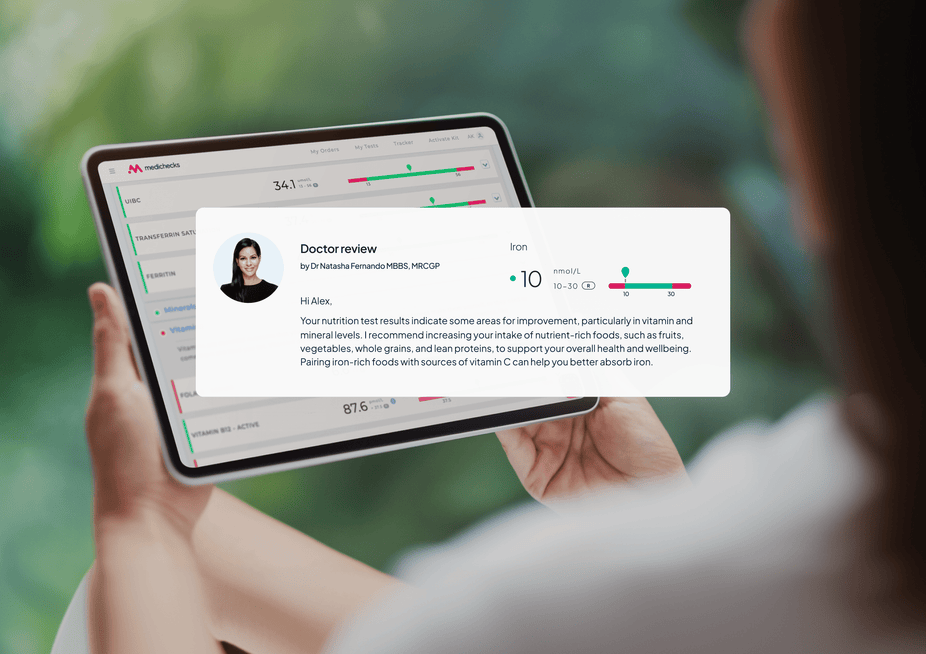
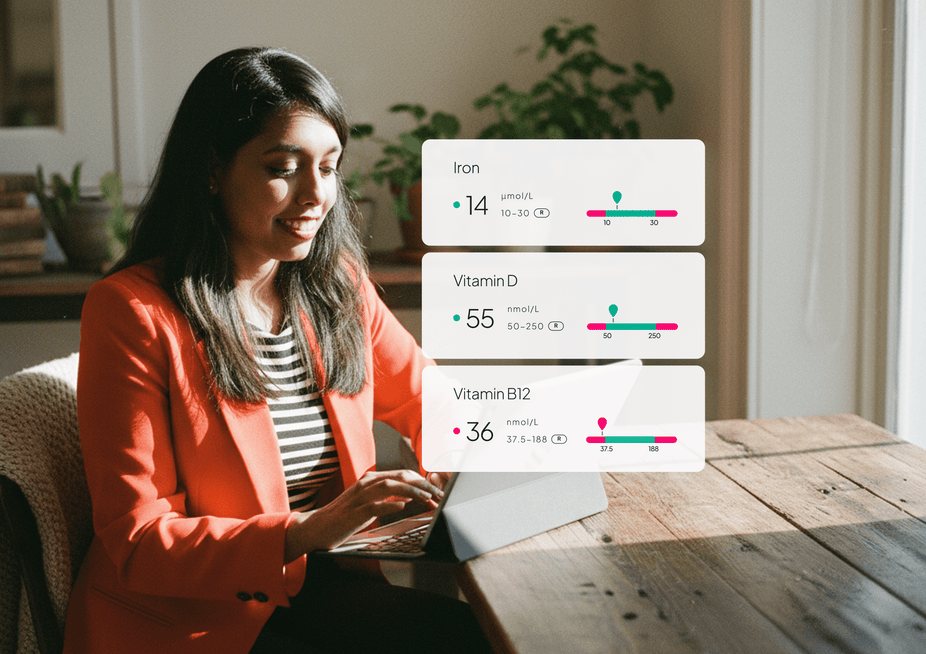
- How long does it take for my results?
- What if there is an error?
- Blood testing FAQs
Where can I get a blood test?
You can get a blood test through the NHS, private clinics, or by using at-home kits.
NHS blood tests
Blood testing is one of the many services the NHS provides either at your GP surgery or local hospital. Blood testing helps to investigate symptoms and diagnose a condition. A trained clinician will take your blood, usually from a vein in your arm, and the blood will be sent to a laboratory to be analysed.
Private blood tests
Private blood tests can be ordered online and taken at home or in a clinic. Depending on your needs, you can choose to collect your sample with a finger-prick test or have a medical professional take your blood for a venous test.
How is blood collected?
Firstly, how is your blood collected in a blood test? At Medichecks, you have two options: venous collection or finger-prick. These are the two most effective ways, although other methods exist.
Venous blood sample
A qualified healthcare professional will use a needle to take blood from a vein, usually in your arm. The blood is collected into a tube (or several, depending on the test).
What is a venous sample best for?
Venous blood draws are best for testing many different biomarkers at once, as it allows a large volume of blood to be drawn.
It’s also recommended to opt for a venous blood draw if you are using hormone-based creams or gels, as they can contaminate your finger-prick results.
Finger-prick sample
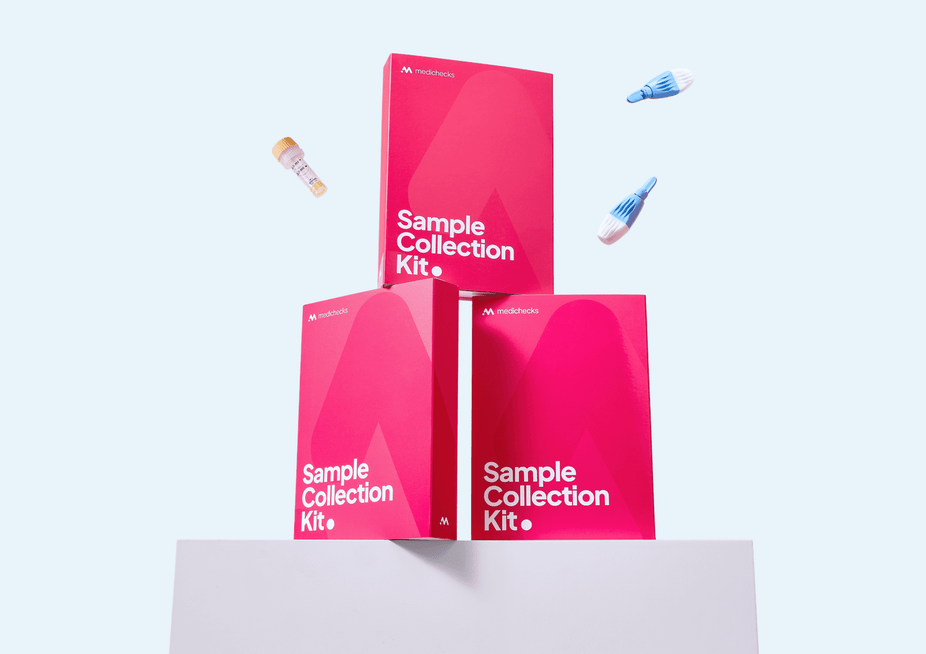
You can do a finger-prick blood test yourself, at home, and it’s considered less invasive and simpler than a venous sample. With a finger-prick test, you will prick your finger with a lancet and collect a sample of blood.
What is a finger-prick best for?
Finger-prick tests are great for quick checks of single biomarkers and some other tests.
How is my blood test analysed?
All blood tests from Medichecks are analysed by our partner labs. We only partner with labs that are fully accredited and undergo the same testing and auditing that NHS laboratories go through.
You can read more about the regulation of blood analysis laboratories in our blog.
There are many different techniques used to process blood samples.
Examples include:
- Centrifugation: Blood samples are spun in a centrifuge to separate plasma or serum from blood cells. This allows specific components of the blood to be tested accurately.
- Spectrometry and immunoassays: These techniques are used to measure concentrations of hormones, vitamins, enzymes, and proteins by detecting how substances interact with light or antibodies.
Different tests may use one or several analytical methods to ensure reliable results.
Why do some blood tests take longer than others?
You may notice some of our blood tests have different processing times than others – for example our Ultimate Performance Blood Test takes around 3 days, while our skin IQ Blood Test takes up to around 16 days.
Why do some tests take so much longer?
It all comes down to the types of biomarkers being analysed.
Many routine biomarkers, such as cholesterol, liver enzymes, or thyroid hormones, can be analysed using automated laboratory techniques that process large numbers of samples quickly.
Other biomarkers are more complex and require specialised methods:
- Omega fatty acids: Omega-3 and omega-6 fatty acids are time intensive to analyse. They require a technique called gas chromatography-mass spectrometry [1]. The preparation, separation, and analysis stages take significantly longer, which can extend result times.
- Lipoprotein(a): Longevity-related markers such as lipoprotein(a) require specialised assays and careful calibration, which can increase processing time.
- Apolipoproteins A and B: These proteins are measured using immunoassays that may be batch processed, meaning samples are analysed together at set intervals rather than immediately.
These additional steps help ensure accuracy, but they do mean some results take longer to return.
What if there is a blood sample error?
Occasionally, blood sample errors happen. They can occur for a variety of reasons and usually mean that a sample cannot be tested, or the full range of tests cannot be performed.
The most common blood sample errors are:
- Clotted samples
- Haemolysed samples
- Insufficient samples
If a sample cannot be analysed, you will usually be contacted and advised on next steps. We go into more detail about blood sample errors and how to avoid them in our blog.
Blood testing FAQs
Read on for answers to our most common blood testing questions.
How long do Medichecks results take?
Medichecks blood tests usually take between three days to three weeks (for tests analysing omegas), although this time can vary depending on the post and how busy the labs are.
Will my blood sample degrade in the post?
In general, blood markers are stable for a few days before they deteriorate. So, it’s completely fine to test a sample that’s been received through the post.
With that in mind, we always advice taking your Medichecks test in the morning and posting before the lunchtime mail collection.
What’s the difference between Medichecks and NHS?
Medichecks is a legitimate and highly-rated provider of private blood tests in the UK. We’ve been operating since 2001, use the same UKAS accredited laboratories as the NHS, and every test result is reviewed by our GMC-registered doctors.
The difference between Medichecks and the NHS, is with Medichecks you have the power to take control of your health, without the need for a GP referral or long waits for appointments.
Does a blood test hurt?
It is completely normal to feel nervous before a blood test. However, there is no need to be - the process is quick and straightforward.
With a venous blood test, you may feel a sharp scratch when the needle goes in, but drawing the blood isn’t painful. Your arm can bruise afterwards at the site where the needle went in, though this doesn’t happen often.
For a finger-prick blood test, you will feel a scratch and slight pinch on your finger in the area where the lancet goes in. This area may be slightly tender for a little while after taking your sample.
How long does a blood test take?
The blood collection itself is usually very quick. A venous blood draw typically takes just a few minutes, while a finger-prick sample can be collected in around five to ten minutes, depending on the test.
References
- Muhammad Alinafiah S, Azlan A, Ismail A, Mahmud Ab Rashid NK. Method Development and Validation for Omega-3 Fatty Acids (DHA and EPA) in Fish Using Gas Chromatography with Flame Ionization Detection (GC-FID). Molecules. 2021 Oct 30;26(21):6592. doi: 10.3390/molecules26216592. PMID: 34771001; PMCID: PMC8588356.
Related Help & Advice